
Every dorm and lecture hall has stairs. Not every student can take them.
Residence halls, labs, and lecture buildings all share one blind spot: when a fire alarm shuts the elevators down, the students, faculty, and visitors who can't take the stairs have no way out. Outpost gives your campus the equipment, the trained responders, and the documentation to close it — under ADA Title II, Section 504, and the Clery Act.
Three offices are already asking for this plan.
Public universities have duties under ADA Title II and Section 504 to make emergency evacuation accessible — not just doorways and ramps, but getting a person out.
NFPA 101 and the Cal Fire Code expect a means of egress for everyone; annual drills and inspections are where the gap gets found.
The Clery Act requires testing and disclosing emergency procedures, and insurers increasingly want documented evacuation capability at renewal.
In a fire the elevators lock out — and a dorm is one of the few places the code doesn't require an area of refuge.
A HALO chair staged at each stairwell, a ProMove sling to reach the student who can't self-transfer, trained housing and public-safety staff, and an individualized plan for every person who raised their hand — actually installed, not sitting in a queue. That readiness is the entire reason Outpost exists.
Four hours in a stairwell — and the policy that followed.
In September 2023, UC Berkeley graduate student Ryan Manriquez, who uses a power wheelchair, was trapped in his second-floor campus apartment when a fire alarm shut the elevators down. He waited about four hours. He had asked the university for an evacuation chair months earlier; it hadn't been installed. The alarm was false — no one was hurt. After he testified to the Board of Regents, the University of California directed all ten campuses to provide evacuation chairs and individualized evacuation plans. A near-miss doing what tragedies usually have to.
One cabinet per stairwell. One plan for the campus.
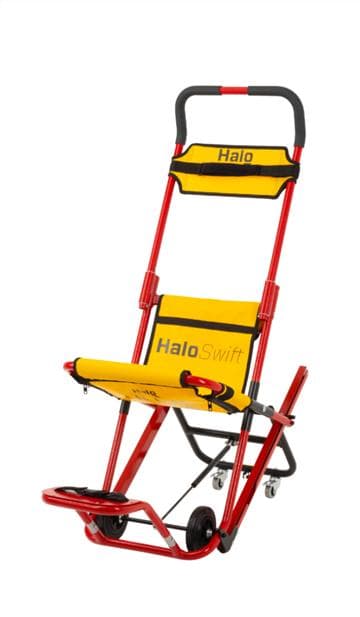
- HALO evacuation chairsWall-mounted in a cabinet at each stairwell across residence halls, labs, and lecture buildings — Swift for most floors, Power for high-rises.
- ProMove transfer kitsFor moving a student or staff member from a wheelchair, bed, or the floor into the chair — the dorm-room and lab transfers a chair alone can't make.
- Responder & floor-warden trainingRAs, housing staff, EH&S, and public-safety officers train hands-on with the actual chairs and stairwells they'd use.
- DAC / ADA-Coordinator sign-offAn accessibility briefing and a PDF sign-off sheet so your Disability Access office can close the file on install day.
- Signage & cabinet decalsSo the chair is found in seconds — in smoke, by a first-year RA who's never used one.
- 12-month audit logInstalls, trainings, drills, serials, and signatures — the record ADA Title II, the Clery Act, and your insurer expect.
Get the Campus readiness flyer
The obligation, the highlights, and a stairwell-readiness checklist — on one page you can forward to your team. We'll email it now.
Build your coverage in 30 seconds
Set your building, pick your chairs, and watch three tiers of coverage price themselves.
Dorms don't require areas of refuge — a chair in every stairwell is the practical fallback your disability-services office can point to.
Estimate only — final counts confirmed on your walkthrough. Chairs & slings are quoted; Go-Bags and SunCase are priced online.
Tell us the campus. We'll send the spec.
One-page spec and a fixed price for your buildings — no call required.
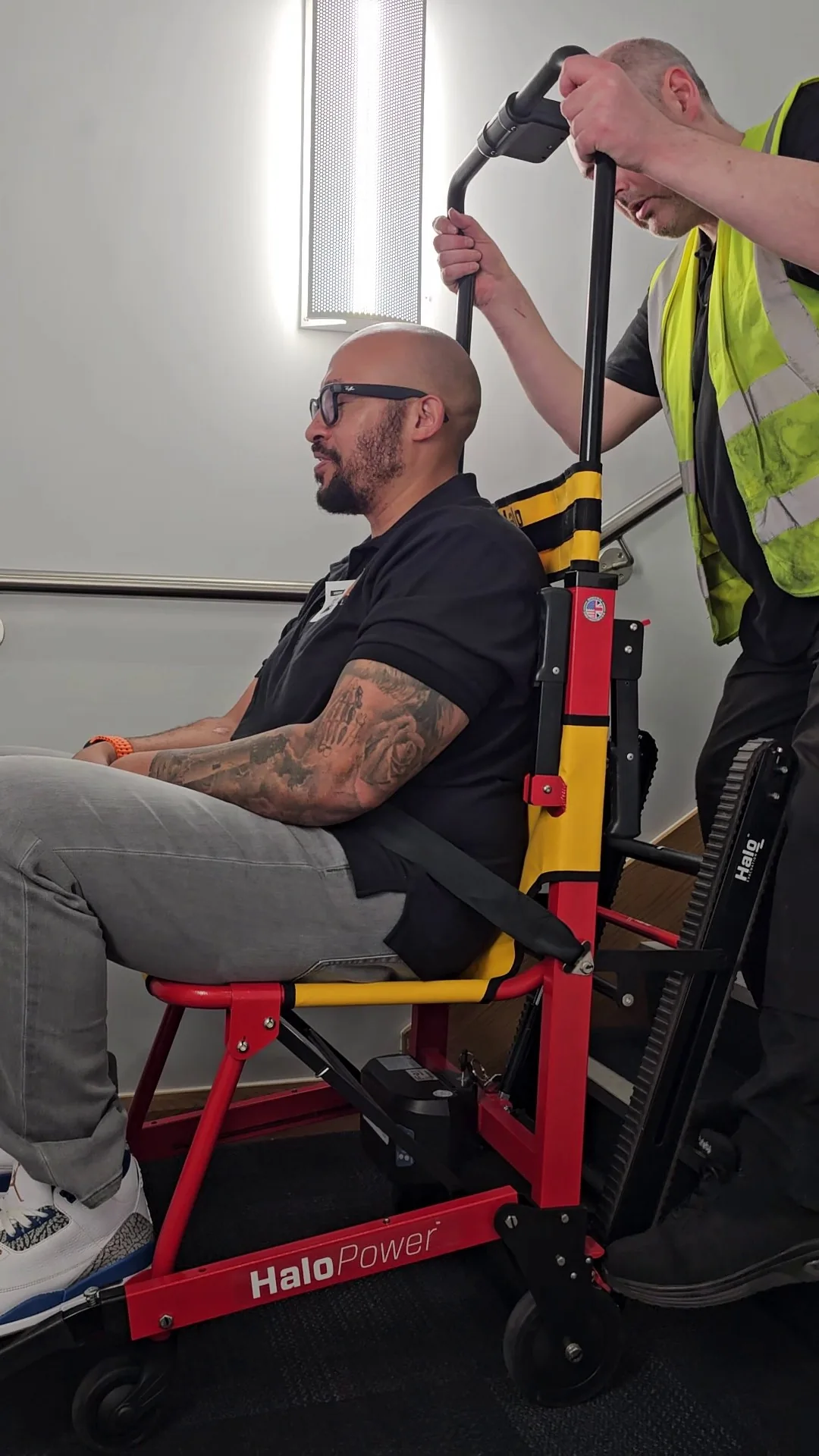
A student who cannot take the stairs, and the thing that moves them.
The HALO Power at the foot of a stairwell. Residence halls are among the few buildings where the code does not require an evacuation lift — which is exactly why the chair matters.
We wrote this one up in full.
Source-cited, no pitch, free to read. If you want to know whether this is a real problem before you talk to anybody, start here.
All field notes →