
We ranked every regulation California cites RCFEs for. The emergency plan came 7th.
We pulled the state's public licensing export for all 13,230 licensed RCFEs and ranked every citation by regulation. Health and Safety Code §1569.695 — the emergency and disaster plan section — drew 472 citations in twelve months. The full table is free, with the method and the rows we excluded.
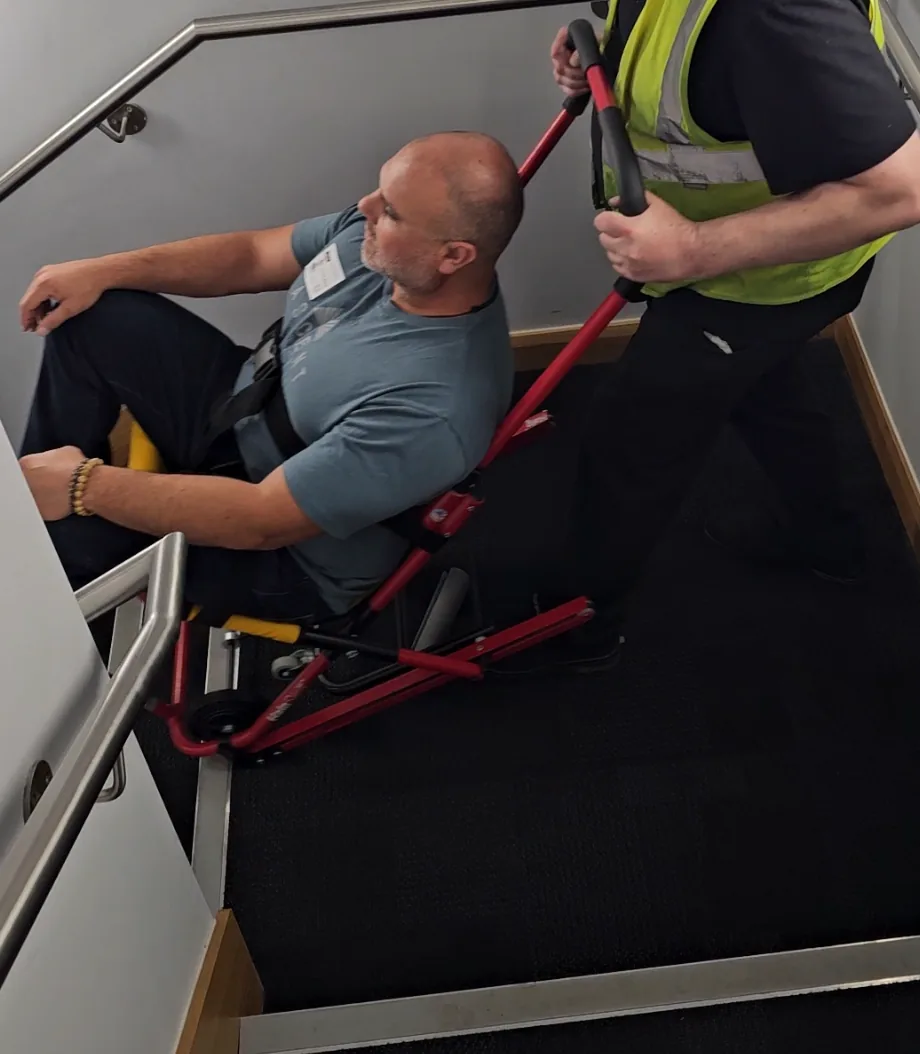
Health and Safety Code §1569.695, the section covering a California RCFE's emergency and disaster plan, was the 7th most-cited regulation in the state's licensing export over the twelve months to September 23, 2026 — 472 citation records, with 117 in the most recent ninety days. It ranks above fire clearance, resident records and administrator qualifications, and below only clinical, food-service, resident-rights and personnel sections. Most operators know §1569.695 for one line, the evacuation chair at each stairwell. That line is one of several duties the section carries, and the citation data does not say which subsection was cited.
What we pulled, and why
California publishes a bulk export of its Community Care Licensing records. Every licensed facility appears as a row, and each row carries a comma-separated list of the regulation sections cited at that facility alongside a parallel list of Plan-of-Correction dates. It is public, free, and almost nobody adds it up.
So we added it up. 13,230 licensed residential care facilities for the elderly. 7,298 of them with at least one citation on file. 56,890 citation records in total, of which 13,302 fall inside the last twelve months. One record means one regulation cited at one facility, matched to its Plan-of-Correction date — a single licensing visit can produce several.
We published the whole ranking rather than the rows that suit us. Roughly 94% of these citations have nothing to do with anything we sell, and a table that showed only our sections would be marketing wearing a lab coat.
The finding: the emergency plan ranked 7th
§1569.695 drew 472 citation records in twelve months, 3.5% of the total, and 117 in the most recent ninety days. That puts it 7th, behind incidental medical and dental care, food service, personal rights, personnel requirements, personnel records, and resident health condition.
It sits above fire clearance (§87202, 240), resident records (§87555, 459 — narrowly), administrator qualifications (§87412, 441) and dementia-care staff training (§87608, 341).
That ranking was not what we expected. §1569.695 is usually discussed as a one-line equipment rule, and equipment rules tend to get cited rarely because they are easy to close: buy the thing, send the receipt. A section that keeps generating findings is usually one with recurring obligations rather than a one-time purchase — and this section has several.
Why one section produces repeat findings
Subsection (f)(1) is the famous one: an evacuation chair at each stairwell, in force since July 1, 2019. A facility closes that once.
The rest of the section does not close once. It asks for a written plan that keeps the facility self-reliant for at least 72 hours, including a power failure. Two shelter locations, one of them outside the immediate area. Keys available on each shift for the cabinets holding plan supplies. Staff training on the plan at hire and annually. A drill at least quarterly, on every shift. Documentation of each drill carrying the date, the emergency covered, and the names of the staff who took part. A signed annual review.
Every one of those is a recurring obligation with a paper trail, and every one of them can lapse in a quarter where the building is short-staffed. A facility can own six chairs and still be cited under this section.
One limit worth stating plainly: the export records which section was cited, not which subsection. We cannot tell you how many of those 472 were chairs versus drills versus records, and we do not claim to.
The spread is the more useful number
Take the four sections that cover readiness rather than clinical care — the emergency plan (§1569.695), the plan's required contents (§87212), fire clearance (§87202) and facility records (§87208). Together they account for 800 citation records in twelve months, 6.0% of the total.
Those 800 records are spread across 630 separate facilities. That works out to roughly one and a quarter per building.
That distribution is the part worth sitting with. A small number of facilities generating a large number of readiness findings would be a bad-operator story. Eight hundred findings spread thinly across six hundred and thirty buildings is a different shape: a lot of facilities each missing a different piece of the same section.
For a single-site administrator, that is a checklist problem. For a corporate operator running twenty communities, it is a standardization problem — the variance between buildings is the exposure, not any one building.
What this data cannot tell you
The Plan-of-Correction date is a proxy for the citation date. It is the closest date the export carries, so the timing is approximate and the ninety-day column should be read as indicative rather than exact.
143 facility rows were excluded because their citation list and their date list were different lengths. Pairing those anyway would have dated citations wrongly and quietly corrupted every trend on the page, so they are dropped and the count is published.
Subsections are rolled up to the parent section, as above. And a citation is a finding at a point in time by one analyst — it is not a verdict on a facility, and it says nothing about what any operator knew or intended.
The full method, the excluded-record count, and the table as a downloadable CSV are all on the report page. If you find an error in it, tell us and we will correct it there and say what changed.
What to do with it this week
Open your own §1569.695 file and check the four items that are not equipment: the assembly point drawn on the sketch, the second shelter location outside the immediate area, the drill log with names on it for every shift in the last four quarters, and the annual review page with a signature and a date.
If any of those four cannot be produced in under five minutes, that is the gap — and it is the gap this section keeps getting cited for, not the hardware.
- ›§1569.695, the RCFE emergency and disaster plan section, was the 7th most-cited regulation in California's licensing export over the twelve months to September 23, 2026 — 472 citation records, 117 in the last 90 days.
- ›The evacuation chair at each stairwell is one line of that section. The rest — the plan, 72-hour self-reliance, shelter locations, keys on each shift, training at hire and annually, a quarterly drill on every shift, and the records — recurs every quarter.
- ›The four readiness sections together drew 800 citation records across 630 separate facilities: about one and a quarter per building, spread wide rather than concentrated.
- ›The export records the section cited, not the subsection, so it cannot say how many findings were chairs versus drills versus documentation.
- ›143 facility rows were excluded where citation and date lists did not align; the count is published rather than the rows being force-matched.
Questions professionals ask
The California Department of Social Services Community Care Licensing public bulk export for residential elder care facilities, retrieved September 23, 2026. It is free to anyone; we ranked it and published the method.
One regulation cited at one facility, matched to its Plan-of-Correction date. A single licensing visit can generate several records, and one facility can appear more than once in any row of the ranking.
Not necessarily, and the data cannot tell you. The export records the section cited, not the subsection. §1569.695 also covers the written plan, 72-hour self-reliance, shelter locations, keys on each shift, staff training, quarterly drills on every shift, drill documentation, and the annual review.
Yes. The top-20 ranking is downloadable as a CSV from the report page, free to quote, cite or reproduce with a link back.
It is a dated snapshot rather than a live feed, because the page exists to be quoted and numbers that move under a citation are worse than numbers that are three months old. The next scheduled refresh is December 2026.
We write these guides so you can act on them without buying anything. Everything here is drawn from public federal preparedness guidance and from packing these kits ourselves. Last updated September 23, 2026.
The RCFE Readiness Score walks the non-equipment half of §1569.695 and tells you which items you could evidence today.