
Inside the Essential+ Go-Bag: every item, why it's there, and what you still have to add
A walk through every item in the Outpost Essential+ Go-Bag, in the words I use when I pack one by hand for a customer: what each piece is for, why two things stay sealed, and the part no kit can include for you.
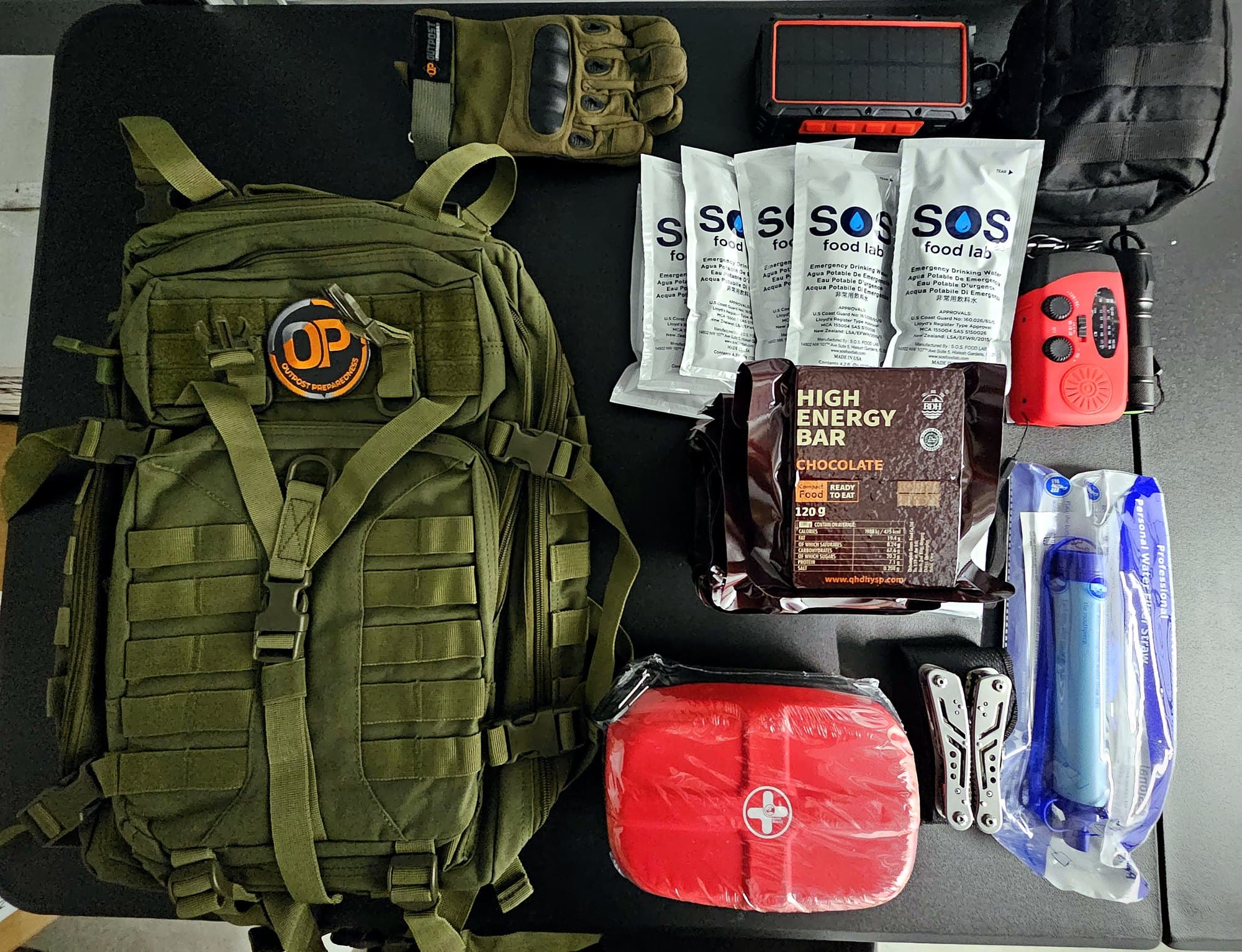
The Essential+ Go-Bag is a 50-liter pack holding food, water, a way to make more water, light, power, a radio, fire, first aid, warmth and tools: enough to get you out of your house, your car or your workplace and keep you going for the first 72 hours. Everything except two items comes out of its retail packaging before it goes in the bag, so the bag is ready the day it arrives. The two exceptions are the first aid kit and the water filter straw, which stay sealed for integrity and sanitation. What no kit can include is the part only you can pack: your medications, cash, important documents and anything personal to your family.
Why I pack these by hand
Every Essential+ that leaves our shop gets packed by me, on camera, for the person who bought it. I talk through each item as it goes in. This review is built from those videos, because the explanation I give a customer is the most honest description of the bag I have.
One rule shapes the whole pack: you're leaving in a hurry. The bag has to get you out of your house, your car or your workplace and keep you going. It is not a basement supply, and it can't weigh what a basement supply weighs.
Food: 15 ration packs
The bag carries 15 BDH food bars. They run 475 calories per 100 grams, and each bar is 120 grams, so the bag holds 8,550 calories in total.
They're rated for a 20-year shelf life. That matters more than it sounds: food in a go-bag gets forgotten, and most emergency food is good for about five years.
Water: 16 pouches and a filter straw
Nobody carries a gallon of water per person per day on their back. Three days of it weighs more than most people can move with. So the bag carries 16 SOS water pouches, sealed, US Coast Guard approved and good for five years, to get you going.
Then the water filter straw becomes your real supply. You can put it straight into a fresh water source and drink, or fill a bottle or bladder and drink through it. It works on fresh water anywhere. It does not work on the ocean.
Gloves, Mylar and the multi-tool
The gloves have carbon knuckles, because after a disaster you're moving heavy things, rocks and broken glass, and everything has an edge on it.
Two Mylar blankets keep you warm or make a shelter, and a third is packed inside the first aid kit. The 21-in-1 multi-tool covers the small jobs, including a couple of wrenches and sockets.
Light, radio and power
There are really three lights in the bag. The flashlight takes batteries. The radio and the power bank each have a light of their own, and both charge by solar or hand crank. If one fails, you have two more.
The radio covers the NOAA weather band, because when the power goes out you need to hear what's happening.
The power bank holds 20,000 mAh. It charges by solar, hand crank or USB, charges a phone wirelessly, and carries three cable types built into the unit.
Fire
The fire starter kit stays in its own neat manufacturer case. Inside is a ferro rod, which throws the spark, plus tinder and a fire-starter cord: shave a small sliver off the cord, add dry leaves or the kindling from the kit, and strike the rod into it.
Take it out when your bag arrives and practice. The only way to get good at starting a fire is to start fires, safely, before you need one.
The two things I don't unwrap
Everything else comes out of its packaging before it goes in the bag. A pile of retail packaging is trash you don't want to deal with on the worst day of your year, so the bag arrives ready to deploy.
The first aid kit stays sealed so you know its integrity is intact. You should be the one to open it, look through it and learn what's in it.
The water filter straw stays sealed for sanitation. Open it, pop the cap and run some tap water through it, so you trust it before you need it.
The straps
Before a bag ships I tidy the straps so nothing dangles. Anybody who has worn a pack in the military knows how loose straps catch on everything. Once it's yours, set it up however you carry.
What only you can add
No kit can pack the most important things for you. Before your bag goes by the door, add your medications, some cash, copies of your important documents, and anything else personal to you or your family.
There are several pockets built for exactly that. Make the bag your own.
The Food & Water Upgrade
The Food & Water Upgrade mirrors what's already in the bag: 16 more SOS water pouches and 15 more BDH food bars, packed as a separate set. It's how you stretch one bag's food and water further for the people leaving with you.
- ›A go-bag gets you out and keeps you going. Carry some water and a way to make more, not three days of water weight.
- ›Shelf life matters in a bag you will forget about. Check the dates on whatever food and water you pack.
- ›Have more than one light, and at least one that doesn't depend on batteries.
- ›Practice with your fire starter and your filter straw before you need them.
- ›Your medications, cash and documents are the part no kit can include. Pack them yourself, tonight.
Questions professionals ask
Integrity and sanitation. You should be the one to open both, check them and learn them.
No. It filters fresh water. It does not make ocean water drinkable.
The BDH food bars are rated for 20 years and the SOS water pouches for five years.
Your medications, some cash, copies of your important documents, and anything personal to your family.
We write these guides so you can act on them without buying anything. Everything here is drawn from public federal preparedness guidance and from packing these kits ourselves. Last updated November 24, 2026.
I pack every Essential+ by hand in San Diego, and through November 30 each one also places an Essential Starter Kit with a veteran in need.